LIQUEFIED
NATURAL GAS

LNG is liquefied natural gas that is widely used in the energy sector. Compared to other fossil fuels, LNG produces up to 25% less CO₂ emissions, 90% less NOx emissions, and no sulfur or dust particles.
The result: cleaner, safer, and more environmentally friendly energy for local and global use.

ABOUT LNG

LIQUIFIED NATURAL GAS (LNG)

LNG is natural gas that has been cooled to around -162°C (-260 °F), at which temperature the gas is in a liquid state. Cooling causes a 60,000% reduction in volume, allowing the gas to be effectively transported and stored in insulated vacuum tanks on trucks, containers, and ships. Therefore, LNG is a more flexible and storage-friendly solution than piped gas or compressed natural gas (CNG).

Facts about LNG
Liquefied Natural Gas
Main Components
Metana (CH₄)
Boiling Point
-160°C
Volume: Natural Gas
54MJ/kg to 56MJ/kg
Lower Flammable Limit (LFL)
5% based on volume
Upper Flammable Limit (LFL)
15% based on volume
ENVIRONMENTAL BENEFITS

Environmental Benefits of LNG

Advantages of Chemical Properties

LNG consists mainly of methane (CH₄), so it produces lower emissions when burned. The combustion process only produces water vapor and CO₂.

Other fuels such as propane and oil have more carbon atoms, resulting in higher CO₂ emissions.

As the simplest hydrocarbon, LNG produces the lowest emissions, even reducing emissions by up to 25% compared to light fuel oil.

Low-Risk LNG

LNG has good safety characteristics because it has a low flammability level. LNG can only burn in a gas-air mixture of 5-15%. Below or above that, LNG will not ignite, and still requires a spark to burn. LNG can only burn automatically at a temperature of around 540°C.

In the event of a leak, the extremely cold LNG will be heavier than air, but it will quickly evaporate and then rise to form a mixture that is not easily flammable. This is in contrast to other heavy gases, which tend to settle on the ground and potentially form flammable areas.

LNG is Non-Toxic

LNG is colorless, odorless, and non-toxic. Natural gas leaks can still affect the amount of oxygen available in enclosed spaces. LNG can be dangerous if someone comes into direct contact with the super-cold gas. In general, natural gas is considered a very safe fuel, and is therefore often used as a household gas.

Effects of a Leak

LNG leaks generally do not harm the ecosystem, unless there is direct contact with the extremely cold liquid, unlike oil spills which are highly risky.

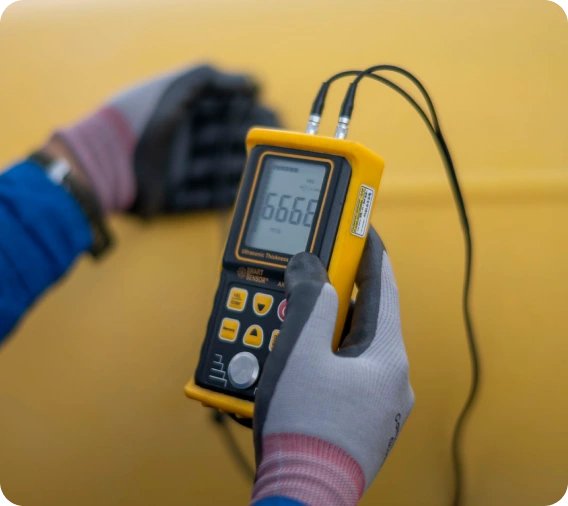
PGN LNG Indonesia prevents leaks through strict procedures and modern technology to maintain operational safety.

OPERATIONAL BENEFITS

Ease of LNG Operations

LNG is a clean energy source with easy regulations. It requires minimal maintenance and a fast and simple delivery process.

Economical
Maintenance Costs

Using LNG as an energy source significantly reduces maintenance on boilers and engines. LNG has unique operational advantages, burning cleanly with minimal soot and low dust/particle emissions. This significantly reduces the frequency of maintenance shutdowns.

Better Regulatory Options

LNG offers far better regulation and control of the combustion process than oil. Better regulation reduces excessive energy consumption and can provide significant economic benefits. LNG is particularly beneficial in businesses with high fluctuations in energy production and consumption.

Easy Delivery System

By using LNG, all gas infrastructure and monitoring is handled by us. We ensure that stocks are always available so you can focus on your core business. If necessary, you can access monitoring data to view consumption and energy usage analysis.

BUSINESS CHAIN

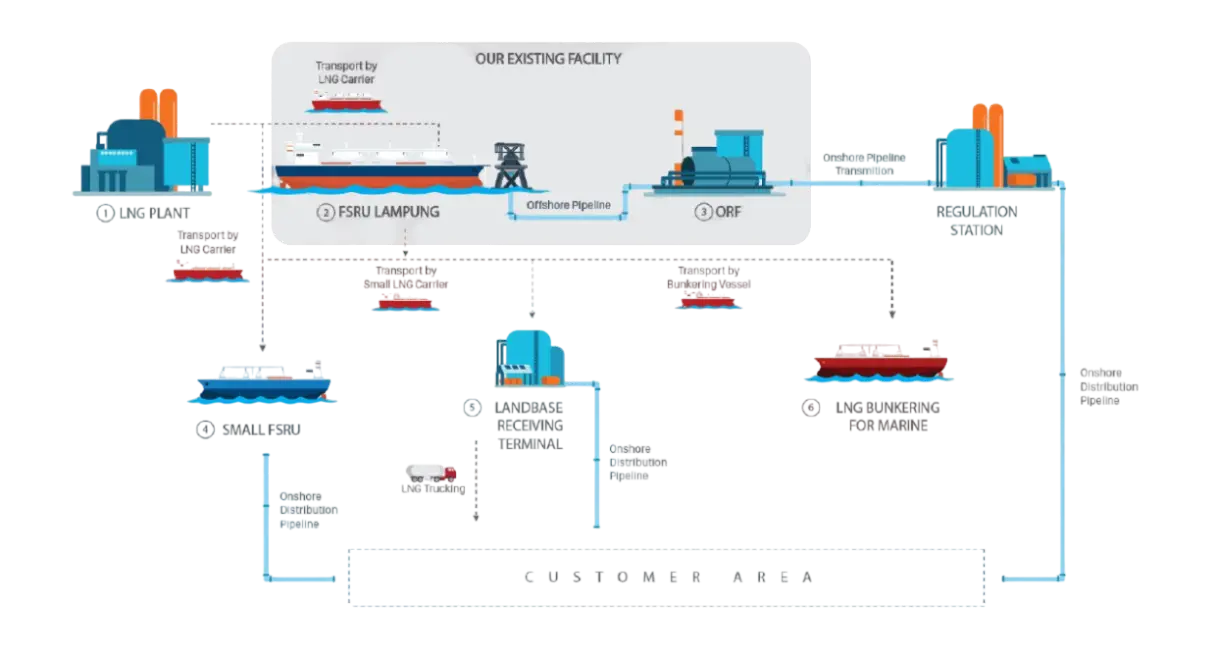
PGN LNG's Contribution to the Supply Chain

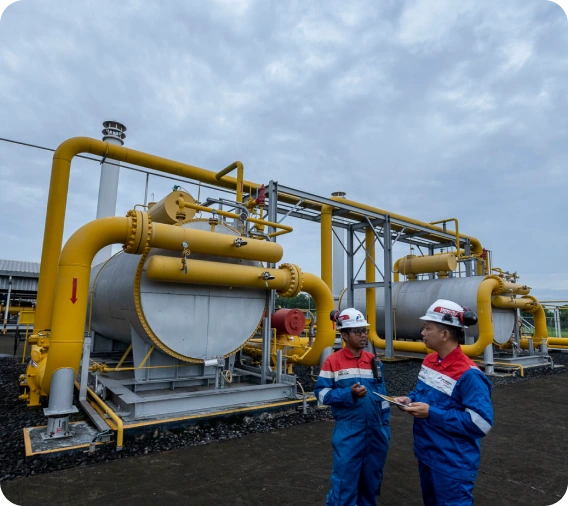
PGN LNG is a subsidiary of PGN established to carry out special operations in the field of LNG. We are tasked with developing LNG infrastructure throughout Indonesia and supporting PGN by ensuring the stability of gas supply security.

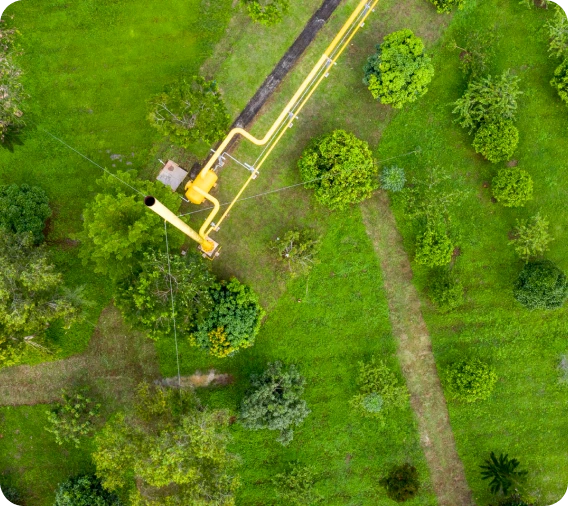
We will be responsible for procuring LNG, transporting LNG to LNG terminals, constructing LNG terminals, and distributing gas directly to customer facilities. We are ready to take on roles throughout the LNG supply chain, from the construction of LNG liquefaction plants, FSRUs, small FSRUs, land-based LNG terminals, small regasification terminals, and LNG bunkering terminals, using various modes of transportation such as LNG carriers and/or LNG trucking.

LNG Plant

FSRU Lampung

Onshore Receiving Facilities

LNG Small FSRU

LNG Base Receiving Terminal

LNG Bunkering for Marine

COST EFFECTIVENESS
LNG energy is more competitive than other fossil fuels

Using LNG as an energy source can have a positive impact on costs compared to electricity and other fossil fuels.

Low Investment Costs

Switching to LNG usually requires little investment, often only adjustments or replacement of burners as needed.

Cheaper Energy Prices

Efficient transportation and low storage costs make LNG energy prices more competitive than electricity, oil, coal, or other gases.

Lower Tax Costs

Lower LNG emissions reduce taxes and environmental costs, making it a more economical energy option.

Contact Us
Connect With Us